
Calumet County Criminal Court Cases
All Wisconsin felony and state-law misdemeanor prosecutions filed in Calumet County are heard in the Calumet County Circuit Court. Its two branches sit at 206 Court Street in Chilton. The judges hear felony, misdemeanor, and criminal-traffic matters, while court commissioners assist with early hearings and other assigned work. Municipal ordinance cases require a key distinction. They are civil forfeiture proceedings, not criminal misdemeanors, even when the conduct resembles an offense under state law.
The Clerk of Circuit Court maintains the public case file for both branches. That file begins when a complaint or other charge is filed. It then grows through hearings, pleas, motions, court orders, judgment, sentence, financial entries, and later postconviction activity. A police report and booking row remain separate agency records. When the real question is what charge reached court or how it ended, the Calumet County criminal case file is the right source.
Two Calumet Criminal Court Branches
Calumet County concentrates its court, clerk, District Attorney, Sheriff, and jail operations in the same 206 Court Street complex. That compact layout makes the record path easier to trace, but each office still holds a different part. The District Attorney reviews law-enforcement referrals and chooses which charges to file. The clerk receives and preserves the filed court record. The two circuit branches hear the prosecution and enter rulings. Sheriff Records remains custodian of deputy-written incident reports.
The official Calumet County District Attorney page shows the office that reviews referrals from the Sheriff, six city police departments, Wisconsin DNR, and State Patrol.
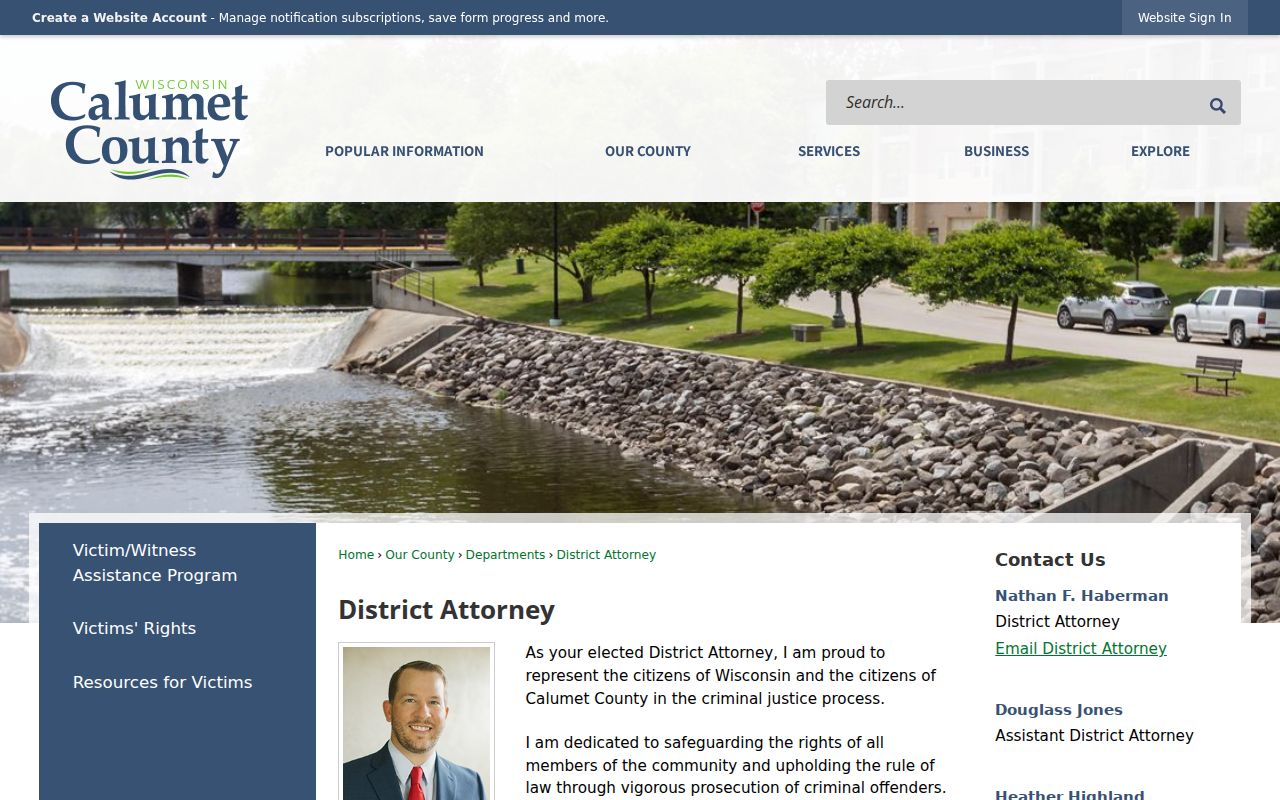
This office-to-office path explains why an arrest-time allegation may differ from the charge later shown on a Calumet County court docket.
Searching Calumet County Case Records
Wisconsin Circuit Court Access, often called WCCA or CCAP, is the free statewide public docket. It does not require a public login. Searchers can use a party name, case number, or citation number and select Calumet County to limit the results. A case-number search is strongest. With a name, compare the available identity details, filing county, case year, and charge information before treating a result as the correct person.
- Open WCCA, read the terms, and accept them.
- Choose party-name, case-number, or citation-number search.
- Select Calumet County and enter the strongest known identifier.
- Open the case number, then read every charge and disposition separately.
- Save the full case number and ask the clerk for any public document missing from the docket view.
The fields change with the search mode. WCCA can narrow a common name, but an online match is not fingerprint identification.
| Field label | Type | Required | Use |
|---|---|---|---|
| Search mode | Tabs or links | Yes | Party, case number, or citation number |
| County | Dropdown | No | Select Calumet to localize results |
| Last name | Text | Party mode | Exact spelling gives the best start |
| First and middle name | Text | No | Narrows a broad party search |
| Birth date | Date | No | Availability varies in the public view |
| Case number | Text | Case mode | Wisconsin formats include year and case-type code |
| Citation number | Text | Citation mode | Use the exact identifier |
Calumet Criminal Case Copies
WCCA is an index and docket, not a complete library of pleading images. Before contacting the clerk, note the county, full case number, caption or party, filing year, and exact docket event or document wanted. Ask whether that item is public, whether an electronic copy is possible, whether a plain or certified copy is needed, and what the total cost and delivery time will be. This focused request helps the Calumet County criminal clerk locate the right file without guessing.
The clerk can be reached at 920-849-1414, with the criminal clerk available through extension 3403. The counter is at 206 Court Street, Chilton, Wisconsin 53014, during the county's published Monday through Friday hours of 8:00 a.m. to 4:30 p.m. When no case number is supplied, the statewide circuit-court fee schedule allows a $5 file or record search per action. Confirm ordinary and certified copy costs for the exact document. Do not apply the Sheriff's per-page schedule to clerk records because the offices use distinct fee rules.
Calumet County Circuit Clerk
206 Court Street
Chilton, WI 53014
920-849-1414
Monday-Friday, 8:00 a.m.-4:30 p.m.
Inside a Calumet County Case File
A public Calumet County case view can identify the branch, judge, parties, attorneys, prosecutor, charges, hearings, bond terms, events, finances, and result. Read charge rows one by one. One count may be dismissed while another ends in conviction, and the overall case status does not replace those separate outcomes. Anonymous users do not always receive downloadable pleadings, so the event list should be used to identify what to request from the clerk.
| Case identity | County, case number, filing date, case type, status, branch, judge, and linked cases. |
|---|---|
| Parties and counsel | Party role, attorney, and prosecutor shown in the public case record. |
| Charges | Statute, description, severity or class, offense date, plea, and count-specific disposition. |
| Docket activity | Event date, event type, notes, and upcoming activity. |
| Release terms | Public bond entries and conditions tied to the court case. |
| Judgment and sentence | Confinement, probation or extended supervision, fines, fees, restitution, and other public terms. |
Use the judgment and the disposition for the specific count. A caption alone cannot show whether the filed allegation was amended, dismissed, tried, or resolved by plea.
Calumet Criminal Case Codes
Wisconsin case codes help sort Calumet County criminal court cases before a reader opens the detail. CF marks a felony case, CM a misdemeanor case, and CT criminal traffic. These labels describe case type, not the result. A CF case can contain a dismissed charge. Likewise, a closed status generally means the case reached a judgment or other endpoint. It does not mean the record was sealed, destroyed, or expunged.
- Disposition
- The final result for an individual charge, such as conviction, dismissal, or acquittal.
- Read-in
- Dismissed or unfiled conduct considered at sentencing by agreement, not a separate conviction.
- Recognizance
- Release based on a promise to return, subject to court conditions.
- Bench warrant
- A court order for arrest, often issued after a missed appearance.
- Repeater
- A status that may increase punishment under Wis. Stat. §939.62.
Note: A WCCA closed status describes docket posture, not erasure, innocence, expungement, or the outcome of every charge.
How a Criminal Case Moves
A Calumet County prosecution commonly starts with a complaint and initial appearance. A felony then proceeds through a preliminary hearing or waiver, followed by an information and arraignment. Misdemeanor procedure differs in detail, but both case types can include pretrial conferences, motions, plea talks, or trial. The docket records each public event as it occurs. After a plea or verdict, the circuit judge enters judgment and sentence. Postconviction motions and an appeal may add later entries even when the main case is closed.
Case flow: Charges Filed › Arraignment › Pretrial › Plea or Trial › Disposition › Sentencing
This sequence is the court file's core. An arrest and booking may precede it, but no Calumet County criminal case exists until a charge is filed with the court.
Calumet Criminal Case Support
The Calumet County Victim/Witness Assistance Program provides case and hearing information, notifications, courtroom support, and help with impact statements and restitution. Those services sit beside the public docket but do not turn protected victim details into public records.
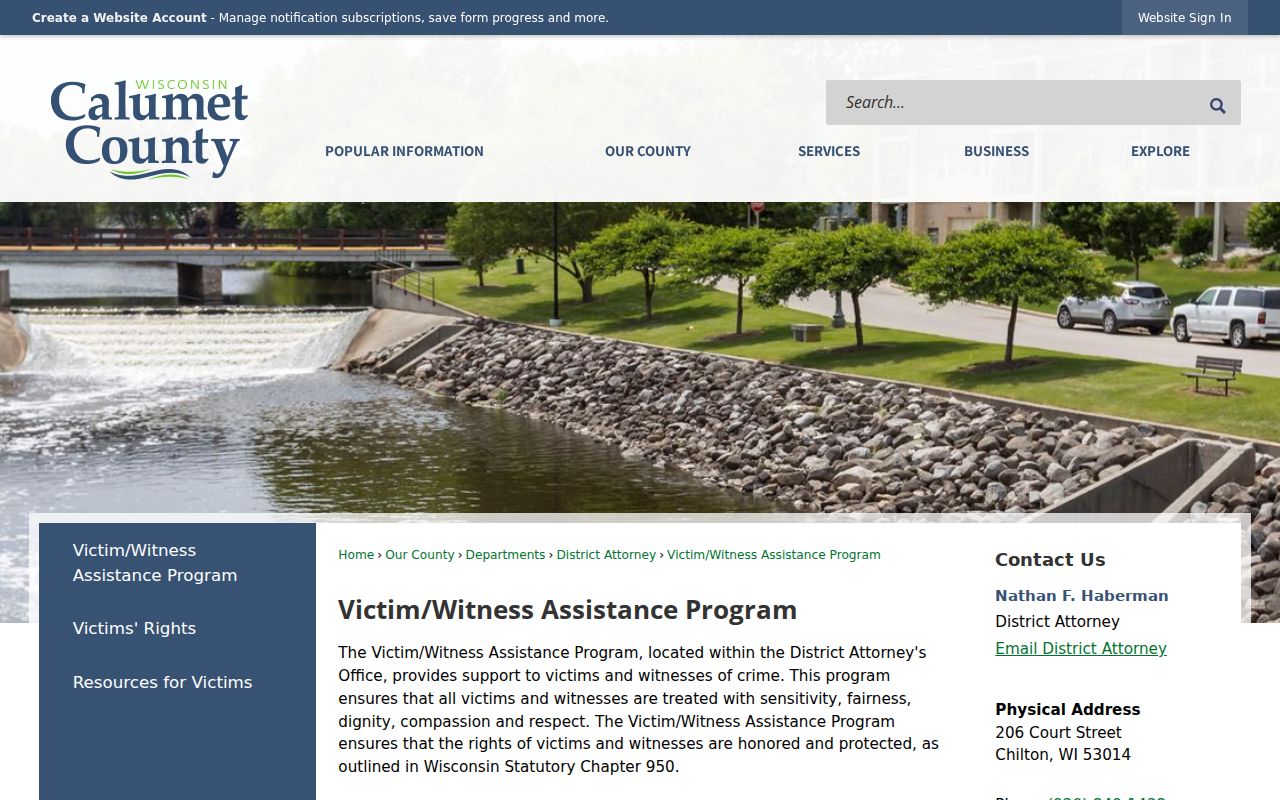
The program is a direct county contact when a victim or witness needs procedural support rather than a general case-file copy.
The official Wisconsin DOJ criminal-history forms index serves another purpose: self-review, correction, and repository-record requests involving the Crime Information Bureau.
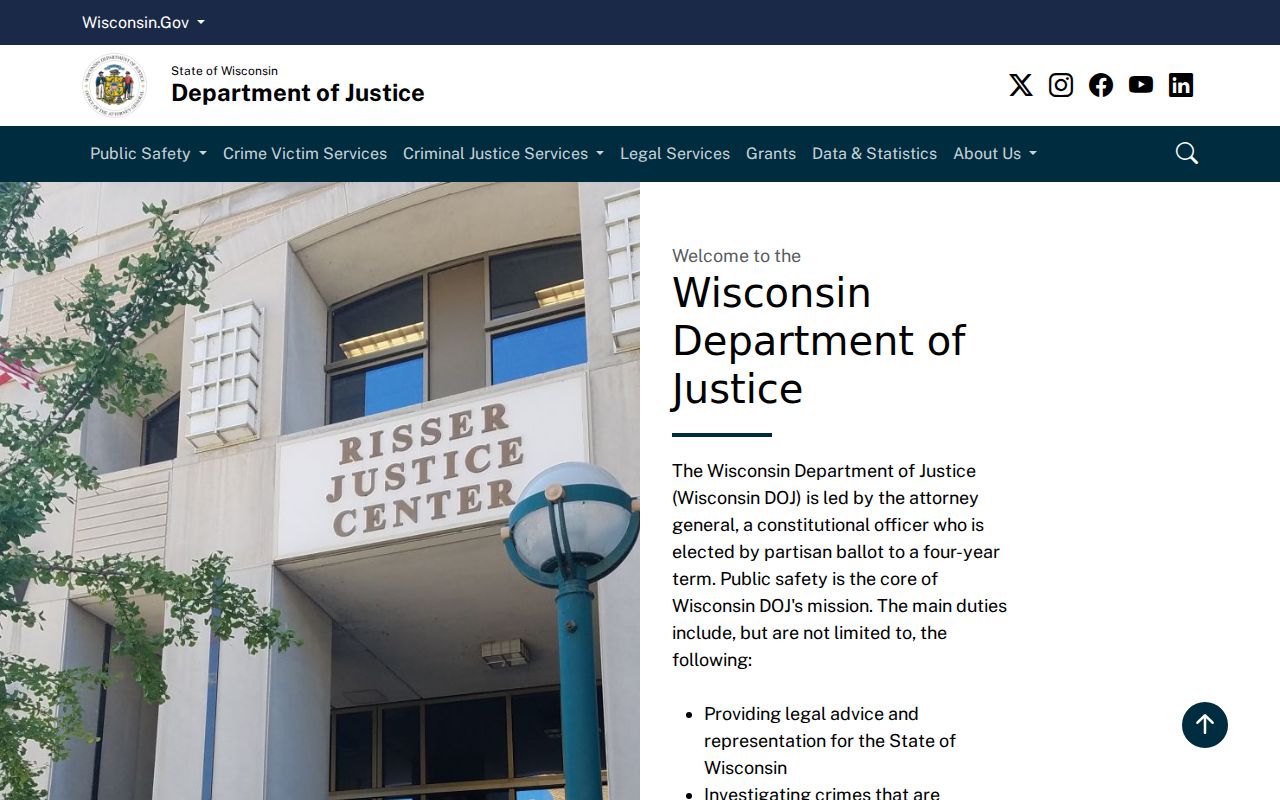
That statewide repository route is useful when the question concerns a fingerprint-supported history, while the Calumet County clerk remains the source for the court case file.
Reading Calumet Case Dispositions
Start with the charge table, not the headline status. Compare the original count, statute, severity, plea, and final disposition. Then review the event log and judgment for the sentence tied to a conviction. Arrest-time charges can change before filing, and a prosecutor may amend or dismiss a filed count. A person can therefore have a real booking record and no conviction, or a Calumet County file in which different counts end in different ways.
WCCA and the Wisconsin Online Record Check System are complementary. WCCA is a free name-based public court docket. WORCS returns a paid Crime Information Bureau product built around fingerprint-supported identity cycles and later reports from prosecutors, courts, and corrections. A case may appear in WCCA but not in CIB if prints were never linked or a later disposition has not yet arrived. For the broader distinction between booking and court outcomes, the county arrest lookup follows the record from custody to filing.
Case Record Access & Restrictions
Wis. Stat. §19.35 states Wisconsin's public right to inspect and copy records, subject to laws and the required balancing analysis. Section 19.36 identifies limits and records affected by other protections. Juvenile cases, confidential matters, protected victim information, medical details, Social Security numbers, and other restricted data may be withheld or redacted. Public access does not make every document or every field available online.
Expungement under Wis. Stat. §973.015 is a narrow sentencing-time remedy. When properly completed, it expunges the qualifying circuit-court record. It does not give the judge power to erase every copy held by the District Attorney, police, transportation officials, or CIB. If a Calumet County case is missing from WCCA, contact the clerk with the best identifiers. The absence may reflect confidentiality, expungement, spelling, county selection, or a lack of filing. It is not proof that no event occurred.